Monday, January 13, 2020

Finders Keepers - Character Generator and Rules


Rules

Three stats
Strength - Lifting, breaking, resisting poison and disease
Dexterity - Sprinting, dodging, climbing, fiddling, lock-picking
Charisma - Yelling, lying, hoping for the best, looting
Lowest of 3d6 for each for the bonus (from +1 to +6)

Checks and Saves usually require a roll of 15 or more to succeed. Some actions may require a roll of 10+ or 20+.

Dying
1d6 max starting HP
Worn armour subtracts from damage taken
While at zero HP, each blow has a [dmg]-in-20 chance of resulting in death or unconsciousness

Starting gear
Gain Useful, Odd, Memento, Weirdness

Three options for additional gear:

A) Sum highest stat and HP [Standard]

2. Big ranged (d10), heavy armour (2a), Talent, Memento
3. Two melee (d6), light armour (1a), Arcana, Odd
4. One melee (d6), Arcana, Odd, Weirdness
5. Big melee (d10), melee (d6), small ranged (d6), Talent
6. Ranged (d8), light armour (1a), Failed Career, Useful
7. Melee (d6), small ranged (d6), Weirdness, Memento
8. Big melee (d10), Failed Career, Useful
9. Arcana
10. Small ranged (d6), Failed Career
11. Basic melee (d6)
12. Nothing


B) Start with XP = 12 - highest stat - max HP (see below for prices)


C) As above, but select randomly from available options [Gonzo]


Weapon damage:
Unarmed - 1
Improvised - d4
One-handed - d6
Noble - d8
Two-handed - d10
Emplaced/three-handed - d12
Light armour - 1a
Heavy armour - 2a
Shield - Sunder to block 1d12 damage, metal can be repaired
Buckler - Allows for defensive Gambits
Tower Shield - 1a from the front

Multiple Damage Dice
Each round, a single target only takes the highest damage shown on all attacks against them. Traits that grant additional damage dice, dual-wielding, or ganging up on an enemy follow the same rule.

Dodging
If you spend your whole round trying to avoid getting hit, Make a DEX check. 15+ in melee, 10+ against ranged, 20+ while grappling or being held.

Gambits
Say what you want to do with your attack (disarm, trip, knock over) and what will happen if you fail. It has to make sense. Make a Strength or Dexterity check to try it. 10+ most of the time, 15+ if the enemy is more skilful than you, has more legs, is bigger than you etc.

Scars
If knocked to exactly 0HP from full, gain a scar. If you gain a scar a second time, gain an affliction instead. The first time you gain a scar or affliction, increase your max HP by 1d6. Roll the die used to deal the damage:
  1. Shattered Hand - One of your hands is out of use until you rest and get it looked at, after which it's fine besides looking a bit gnarled
  2. Shaken Nerves - You stammer, twitch, or shake, unless you use something to calm your nerves.
  3. Lasting Pain - A nasty scar that causes intense pain if pressed on
  4. Battle Scars - A random limb or half of your face is badly scarred and you lose all feeling in it. If you roll this Scar a second time you also lose all movement of the affected area
  5. Gouged Face - A random part of your face is gouged enough to impair its use and look bad (d6) 1. Left Eye, 2. Right Eye, 3. Ears, 4. Nose, 5. Teeth, 6. Jaw
  6. Busted Lung - Your breathing is always loud and you can't hold your breath as long as normal
  7. Extremity Loss - Lose a finger, ear, or other small part of your body that you could live without
  8. or more, Afflicted - Abusive, paranoid, irrational, hopeless or something else. Anyone that rests with you nearby recovers 1 fewer HP

Afflictions:
  1. Organ Damage - A vital organ is in critical state. If you suffer any other Affliction it gives in, and you die
  2. Fading Senses - One of your senses is slightly dulled now and is completely gone if you suffer another Affliction
  3. Disfigurement - Your injury has left your face totally disfigured
  4. Splintered Mind - A specific element of this injury is stuck in your mind. Take double damage if you are forced to relive it and don't spend time freaking out
  5. Lost Limb - One of your limbs is torn off or otherwise made useless
  6. Fractured Skull - You have trouble talking and making facial expressions. If you suffer this Affliction a second time your skull is utterly split open and you die
  7. Broken Body - You require a crutch or cane to go faster than a hobble
  8. or more, Shadow of Death - You shouldn't have survived that. You have nightmares of your own death every night. Roll 1d12 instead of 1d20 the next time you are damaged at 0HP
Experience
In return for making oaths, obeying love potions, character portraits, completing major quests in a stylish manner, acquiring achievements, going to heaven, solving problems effectively etc. you gain XP. You spend XP only at character creation, in return for additional items:
1 - Useful Item, Failed Career, Memento, melee weapon, small ranged weapon, shield
2 - Odd Item, Weirdness, big melee weapon, ranged weapon, light armour
3 - Talent, Arcana, big ranged weapon, heavy armour

Like Radioactive Blood
All magical things taste weird, some smell weird, but a good lick will always tell you if it is magical or mundane.

Getting Better
Curses and diseases don't go away on their own. Neither do some injuries. If you want to get better, you'll have to try something and roll 20+ on a STR check (injuries and disease) or a CHA check (curses, some diseases). If you don't succeed, then that method will never work, but you can try something else. "Hoping for the best" counts as a method.

Overkill
If you take more than 10 damage in a round, take another d8 damage next round, or d4 if you roll around in agony on the ground

Other Things
A.K.A. "Oddular Mechanics"
Enhanced: Damage dealt increases to d12. Often against a vulnerable target or risky attack.
Impaired: Damage dealt decreases to d4. Attacking against cover, or while blind.
Deprived: Cannot heal until you get what you need. When it gets deadly, take d6 damage each unit of time - warmth [hour], water [day], food [week-ish], air [round], companionship [month ?]

Gallery
Prepare for Climbing - Konstantin Vavilov

Deserted waters - Hjalmar Wahlin

A. Shipwright - Constellation Swordsmanship


Rob Vital - Ordinary day

Dune Wonder - Ryan Lowe

Friday, December 27, 2019

Automatic List to HTML Translator - Version 3

Version 3.1 and all future versions can be found here

New features:
- External formatting modifier
- Markdown
- Recursion up to depth 20
- Improved input readability (just copy in ordinary tables with common-sense titles, even with numbers or dashes)
- Improved output readability (even if you don't know how JS works, you should be able to edit the generator in post)
- Test using the same function as the live generator
- Fewer bugs???


include "show tables" option:

Saturday, December 21, 2019

Santicorn 2019: Creatures Amidst the Ash

James Young, the wonderful organiser of this years Santicorn, had the following request:

Every few weeks, a poisonous fog that turns all organic life it touches to ash sweeps over the land. What creatures have evolved to survive in this hostile place?

Well done to all the other participants!


Kludge-Gubble: a depressed ash-ling frog made from slain creatures


Exactly like this, but dry and powdery instead of slimy

What can be said about the kludge-gubble that hasn’t already been said by itself? The frog-shaped creature can be heard above the desolate wind once the Fog has passed, croaking “Woe! Woe is me!” to anyone that will hear. Nobody will hear. Because they’re all dead. You hear that kludge-gubble? It’s not all that bad. Kludge-gubbles vary in size from ordinary frog, all the way up to bull-sized sedentary brutes. If torn to shreds, each individual part has approximately 50% chance of becoming a new "baby" kludge.

As far as anyone can tell, kludge-gubbles are composed almost entirely of the ash produced by creatures killed in the Fog. They have the nutritional capacity of boiled mud and their mournful croaking is enough to turn the stomach. Nonetheless, croc-vultures have been observed to land and shred the helpless beasts out of simple spite. Isn’t nature wonderful?


Helicorose: An incredibly delicate flower, that spins to produce clear air

Probably invented by a wizard as some strange attraction, this flower is otherwise helpless against common pests, and would never normally survive in the world. In the ash-washed landscapes post-Fog, free of weeds or any pests, the helicorose can flower. Looking like a mix between an orchid, an avant-garde wind-powered sculpture and a windmill, it spins constantly producing a consistent bubble of clear air directly adjacent to the main stem.

Amidst the desolation wrought by the Fog, gobabbits and croc-vultures often form an uneasy truce. Then more and more of the creatures flee into the cramped bubble. One of them is pushed, knocking into the helicorose… which explodes. The delicate flower shatters into crystalline fragments, the Fog rushes in, and kills everything sheltering within the bubble of air.

Nobody knows how the helicorose grows, or how it could be produced in a more resilient form. All anyone knows is, two can share a helicorose, but three will always break it.


Gobabbits: Half rabbit, half goblin, all dreadful


Like this but worse. Credit Jonathan Fletcher

Each gobabbit has 1d6 limbs, 1d6 eyes, and 1d4 mouths. They are only barely functional creatures, but that is their one redeeming feature: survival through disorganisation. Indisputably an evolutionary mistake, gobabbits take all the worst parts of a goblin and all the worst parts of a rabbit, somehow creating something more dreadful than the sum of its parts

They are busy and confused creatures, and can be seen squirming up from ash-covered hatching grounds within moments of the Fogs passing. Foraging for scraps, fighting, laying their foul rubbery eggs and... mating, make up their entire short lives, before dying in some manner or another. They are incredibly resilient to disease and injury, being composed mostly of undifferentiated cancer-like tissues. Even so, they are squashed, crushed, carried off by croc-vultures, burnt in steam-vents and fall of cliffs by their hundreds. They are an unavoidable pest, unfarmable, untameable, and generally obnoxious.

Someone who survives the death of the rest of their group by hiding in corpses, throwing themselves off a high ledge, or simply fleeing naked into the darkness, is often referred to as a "gobabbit". It's a mixed insult/accolade, to be sure.


Nuclear Albatross

Perhaps there is only one nuclear albatross. Perhaps it is the first or last of its species. Maybe it is a scout from another planet or eon, sent to observe the devastation we have wrought on ourselves.  Whatever the case, this creature is perfectly capable of spending months on the wing, high above the Fog, warming the wind beneath their wings with the radioactive heat pouring between their lead ribcage.

What does the nuclear albatross have in its mouth?
  1. A ponds-worth of rare, possibly extinct fish
  2. A merchant, who made a very bad deal
  3. A nuclear albatross chick. So cute, only slightly radioactive, very hungry
  4. Twelve ingots of +1 magic metal
  5. A croc-vulture that has just woken up. Surprise!
  6. Water-proof grimoire and an asphyxiated wizard

Death Slime

The humble ooze, normally so resilient, was wiped out almost completely by the Fog. Only one midnight-black subspecies was capable of surviving the onslaught, and has grown to fill the ecological and geological niches that are scattered about the Fog-stricken plains. Capable of dying, desiccating and reviving seemingly at-will, the motile slime is one of the first creatures seen moving just after the Fog has passed, scooping up those who still slumber or await the sunrise, setting the horizon aflame through the haze.

Death slime ranchers have had moderate success out in the Fog desert, but cooking them has encountered some difficulties. The methods attempted so far include:

  • Boiling
  • Frying
  • Slime jerky
  • Alcohol infusion
  • Lye stew
  • Pancaking
  • Salad
  • Pickling
  • Poached
  • Burning to ash and made into bread

If you can find a new method that is a) nutritious, b) effective and c) survivable will unlock vast calorific vistas.


Rock-lings: Philosophers of sand and stone


Credit Edgar Gómez
Equipped with inorganic shells of stone, the rock-lings spend their Fogs in sealed, silent meditation. They often enter this self-made isolation with thorny theological problems, emerging after the days of poison with follow-up questions, or even answers. Often, the original asker of the question is so much ash on the breeze, the irony of which is not lost on the rock-lings.

What is this rock-ling considering?

  1. If a Wish spell is cast with the command "I wish this spell was not cast" what would happen?
  2. If the Authority bids you to forsake him, is it a sin to obey, or a sin to disobey?
  3. Where do rats come from?
  4. If two arrows are fired towards the sky, one kills a man and the other lands in the sand, why should one archer be guilty and the other not?
  5. Why... and also... how? (This rock-ling discovered magnetic vodka a few minutes ago)
  6. Nothing at all, just looking pensive

Croc-Vultures

Nobody knows where the croc-vultures go
Maybe they go where the wind doesn't blow
Maybe they fly up up over the snow
Maybe we'll never, ever, ever know

Nobody knows what the croc-vultures eat
What strange ways they have of finding their meat
What do they do in that ash-stricken heat? 
What are these creatures, these horrid elite?

Nobody knows what the croc-vultures see
They chortle in squalor, they savour their glee
They stare from above, when we're ready to flee
They've those round red beady eyes, one, two… three?

But everyone knows
That they're fucking assholes


Friday, November 29, 2019

Heat Tomb, Mend Tusk, Spin Centipede - What to do with weird spells

It never looks anything like this. Credit Greg Rutkowski

I've been dabbling with the Magic Words spell system for a while. Spell research in Die Trying v.1, entirely supplanting traditional GLOG casting in Die Trying v.2, humourously effective in a Grimoire Generator, and soon to supplant the list in my Wand Generator (as soon as I figure out how to swap out the recovery mechanic). It's been funny, challenging, thought-provoking and player engaging, but as I try and move towards something vaguely usable to someone other than me, I've hit a snag: how the hell do I explain how to make spells to someone?

To make sure we are all on the same page, a brief overview - magic words are taught, stolen, eaten or invented, combined into spells of two or more words, then cast using Magic Dice (MD, d6s). All of their numerical values is represented by the [sum] of all the MD rolled, and/or the number of [dice] used in the spell. Wizards can learn spells from a Shared list of generally useful words like "Symbol", "Conjure", "Transmute", from a list of school-related words, or from the full list of 1000 or more. If you want an example, try the Die Trying -> Cheap Tricks generator on the sidebar. You'll get a wizard that comes equipped with one of each of the previous sets.

Magic words are often more symbolic than literal. "Evil" + "Protect" becomes Protection from Evil without any fuss. "Transmute" + "Mud" + "Meat" becomes Transmute Mud to Meat. Prepositions are free, as are a variety of prefixes and suffixes. Twist and turn the spell until it sounds right, reorder it. "Word" becomes "Power Word", don't question it. Working backwards, traditional single-word spells like Grease or Sleep become Conjure Grease and Word: Sleep.

Wizards can freely swap and adjust their spells, they can transmute Mud to Meat as easily as they can transmute Meat to Mud. Since they are given a lot more flexibility than normal, MD in Die Trying do not return to the caster on a 1-3, they are always expended.

Spells might come from a generated scroll or wand, or invented wholesale by a player working with the limited tools they've got on hand. Whatever the case, Die Trying does not (and could not) come with a spell list. It's up to the DM to work out what the spell does, how it works, and what weird side-cases could be used, at short notice, likely in-game. This is a tall order, and something I hope I can help with.

What does the spell do?

Firstly, a lot of spells are just bad weird. Boat Plant? Leg Cabal? Lapse Cheetah? Not all spells are created equal. Some of so niche as to be almost entirely unusable. This is a feature, not a bug. Spell research is hard! Magic is weird and illogical! That said, don't just brush them aside completely. The three spells in the title, Heat Tomb, Mend Tusk, and Spin Centipede were amongst the favourite tools of Andsaca, Consort of Worms, one of the most powerful wizards I've ever had in any of my games. Figuring out how to use such tools was an engaging puzzle in and of itself, beyond any practical use. When faced with such weird combinations, don't try and make the spell better than it needs to be. They'll do something, and one day, perhaps, it'll be exactly what the player needs... but probably not. It isn't your job to invent that problem either!

Secondly, go with your instincts. Better yet, go with what the player(s) think should happen. Common sense will win you the day, and most of the time, players will only try out word combinations with some idea of what the spell will do. If they are malicious and put together bizarre combination of words in attempt to trip you up or trick you, firstly, why are you playing with them? Secondly, you have my full permission for the spell to blow up in their face. Don't mess with magic, because the magic will mess back. That said, magic words are a fun and funny system. Don't punish players that experiment in a clever manner. Do explode cheeky players, because that is just as funny.

Exactly like this

What does the spell do exactly?

Determining the numerical effects of a brand new spell can be scary. If it is under- or over-powered you might end up with a busted game or a disheartened player. That said, there are a lot of tools on your side. The Magic Dice system is tactile and wonderful to use and re-use. If in doubt, the spell deals [sum] damage and has a duration of [dice] rounds.

A lot of trad games have spells that are like lockpicks: they are a standardised and reliable solution to one well-constrained problem. You want spells that are like daggers. Lockpicks do one thing really well, daggers can also be used to pick locks, but not as reliably as lockpicks. This is fine, because daggers can also be used to:

  • Stab things
  • Stab things from far away, via throwing
  • Pry apart things
  • Cut up your dinner
  • Perform surgery
  • Etch your name into walls
  • Stir paint
  • Cauterise a wound when heated

The spells you design should be daggers, not lockpicks. They should solve one problem pretty well, but not perfectly, and have a lot of weird edge-case usage. If you've played Fifth Edition, you have probably experienced the feeling of "can I use X to do Z instead of the intended usage Y? Because A and B and C and also D" and getting the answer of "*flips through the PHB and DMG for fifteen minutes* no."

Finally, don't panic. The restrictions on spells mean they can't be spammed as much as you might think. Sometimes wizards can just wave their hands and solve a problem, and that's ok! Most of the time, they can't. If a spell is over- or under-powered, have a frank and open discussion with the player about the issue, and figure out what kind of changes might need to be made. Maybe the spell is an affront to the universe, and it slowly seals over some of it's power like a scab. Maybe the spell is just so weird and new that it takes the wizard some time getting used to it to unlock the full power.

Sunday, September 29, 2019

Minigame: Potion Roulette

Here's how it works:

Everyone who wants in has to ante up. The last person at the table gets the pot. Whenever it is your turn, pick a "beverage", and drink. If you don't drink, can't drink, obviously cheat, or can't keep it down until at least your next turn, you lose and have to leave the table. Once you touch a drink, it's seen as bad form to put it back. Have fun!

The drinks are a mix of botched potions, gross fluids and literal poisons. That said, you might be able to find an antidote next round! But probably not.

Using this tool: "Refresh Yourselves" to load a new table, each drink has a button next to it when it is drunk and replaced. The players will only see the second list, but are allowed to sniff, scry, mix, dilute and panic as much as they want.


Saturday, August 3, 2019

GLOG Curse: "Wizzard Bidness"

This isn't "Wizard Business". This is "Wizzard Bidness". It's the difference between a scientist and a science enthusiast. Everything is going to go wrong, and it'll be your fault, but man, look at all these results! For further reading, see here.

This is a Curse class for the current GLOGosphere challenge. The first template is accrued through critically failing a Save vs. Fear upon seeing someone else be killed in a horrible accident while visiting the Haunted Alchemabulary. Rather than taking the sensible option of running and screaming, you feel an overwhelming curiosity. Maybe that only happens sometimes. Maybe it happens all the time. Either way, it's time for more TESTS.

Other, truly wonderful and/or bizarre GLOG Curse classes:
Princesses and Pioneers - Curse of the Mirror Struck
A Blasted, Cratered Land - Curse of the Hero
Archon's Court - Nanoweapon Poisoning
Same is Shark in Japanese - Curse of Ska
Slugs and Silver - Curse of the Ogre
Anxious Mimic - Curse of Oath-Rot
Benign Brown Beast - Curse of the Restless Dreamer
Parasites and Paradoxes - Curse of the Doppelganger
Bugbear Slug - Curse of the Abattoir God
Words for Yellow - Several curses in one!

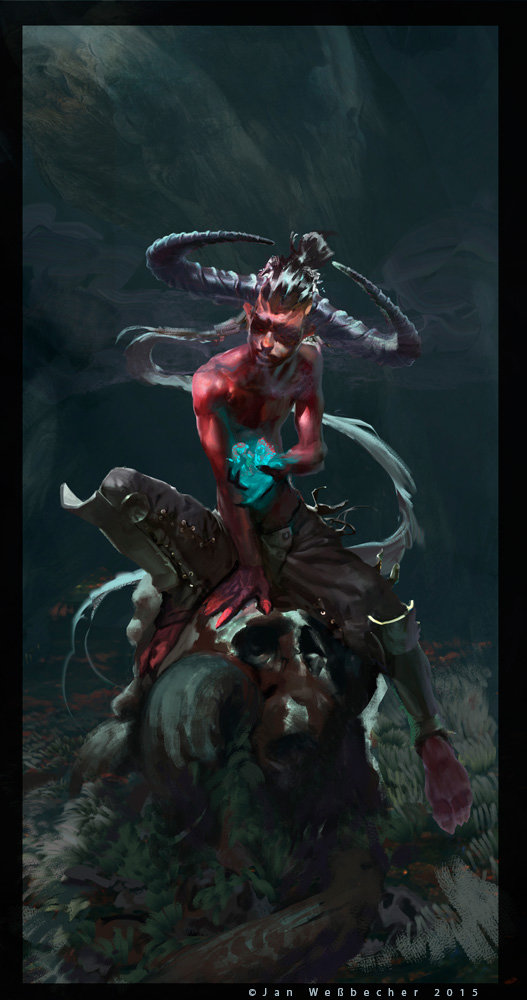
This can only go well. Credit Jan Weßbecher