Tuesday, March 26, 2019

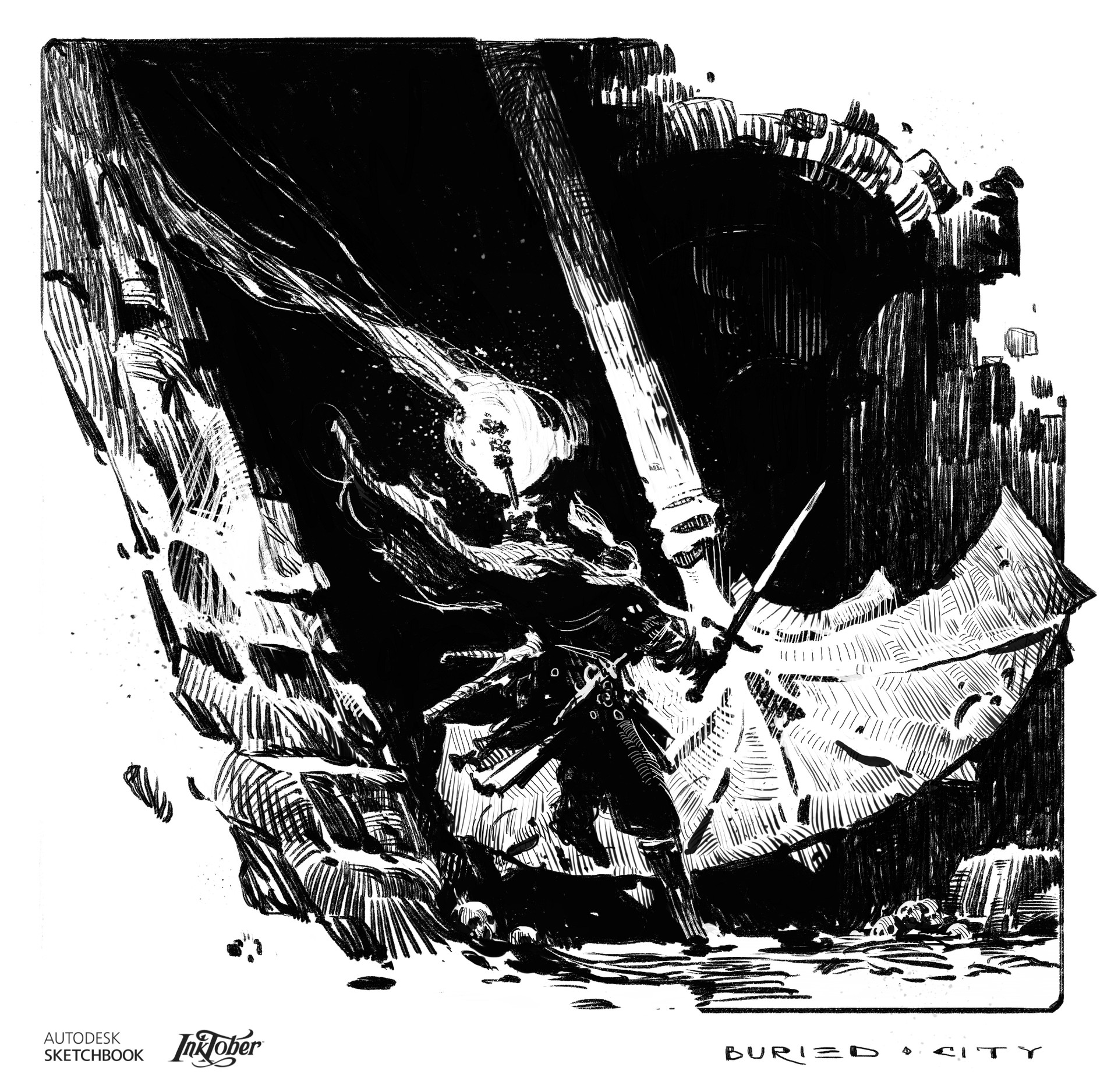
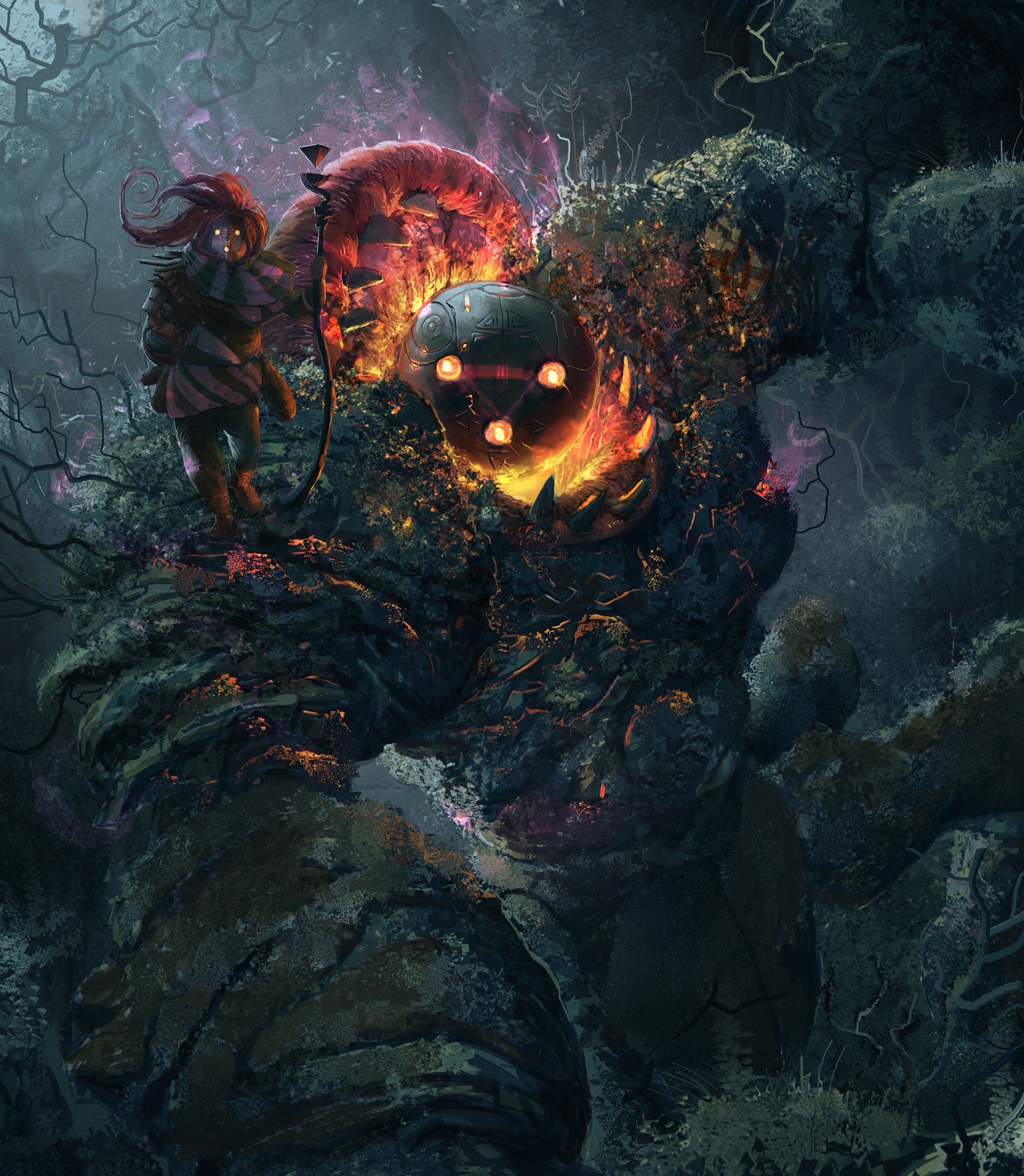
"I ought to be thy Adam" - Golemist (Wizard School)

This was a request/challenge by Micah from Nuclear Haruspex. I was all for collaborative work, but my honour was impugned, and thus, a friendly challenge was born! You can find his version here.

Optionally: there are two competing schools of Golemistry engaged in a cold war amongst the hallowed halls of the Foreign Parts. Golemists are uniquely placed in their ability to compete without risking anything other than the material components of their war machines. Consider:

  • Minute golem saboteurs
  • Gigantic mechs stomping about
  • Contracting them as mercenary forces will inevitably result in your opposition receiving a bid as well

These golems are completely different from elven drones. Probably. Maybe. Who's to say?


Credit Henrik Rosenborg

Monday, March 25, 2019

"Wanderer" v1.7

Tuesday, February 12, 2019

DIE TRYING

At some point, when you have been playing someone else's OSR system, you’ll reach a certain critical mass of houserules, fixes, adjustments and everything else, where it’s more of your own content, and less of the source material. For me, the gateway drug of GLOG and GLOG-alikes lead to it, but whatever the case: you’re now an OSR game designer, whether you like it or not. At this point, there is really only one viable option - slap a different name on it, and keep going.

Credit Konstantin Vavilov

DIE TRYING


DIE TRYING is only a few steps removed from Owlbear Stew, and shares a lot of content. Everything that fits into the family of GLOG will slot in perfectly, and it's OSR compatible. It uses the same races and most mechanics. Spellcasting, wizard schools, spells, workings, and multiple other magical accoutrements are carried across. The Character Interestifier plays a part, as do some weird superpowers. In fact, any time in the past few months, if I've seen an interesting table or bizarre class mechanic, it's been added to The List. What is The List? It's the list of things each new character may have done before they became an adventurer. But I'm getting slightly ahead of myself. With all of these things that are clearly not mine, there are a few things that distinguish Die Trying from your average GLOGalike or OSR hack. For starters:

No classes.

None. Each new character generated is given a random selected appellation, but this has no impact whatsoever. What they do receive is three rolls on a nested 2d20 table (The List) of weird events that have impacted them. Whether providing useful skills, unique abilities, training in the mystic arts or "merely" a failed career, all pretty much guarantee that each new character is unique. As Ian put it in in his rather illuminating* (for me) review, each new character is created "lacking" something important. No one receives a neat package of interlocking abilities. Everyone is a mess of loose ends, and I think that's wonderful. Sometimes, just sometimes, you might end up with a demigod aasimar with 18+3 Charisma (that's a story for another time), but characters like that are exactly as rare as they should be. The other difference Die Trying has is:

No levels.

No levels, and no experience points (as you'd know them). Instead, each seperate stat improves individually. Rolling a critical success, an enhanced critical failure (see below) or missing a check by one grants a checkmark next to that stat. Once you have the requisite amount, it improves. Defence can only be improved by acquiring better armour, and hitpoints improves every time you are injured or almost die, but apart from that, using an ability gives you a chance to improve it.

<sidenote> Enhanced critical failures also come from Owlbear Stew. Critical successes grant experience as-is, but critical failures do not. Instead, the DM produces a likely consequence of said crit fail, and the player has a choice: if they suggest something worse than the DM's idea, then they gain the experience. Otherwise, it's just a critical fail </sidenote>

There are quite a few other ways to acquire these checkmarks, or Xs, and anyone that has read Owlbear Stew will recognise a few of them. Showing up to the session, being selected as the MVP, having had the most dramatic moment of the session, and being the character with the fewest Xs all grant an X anywhere on your character sheet. Anywhere. There are a few other, more important ways to acquire these free-floating Xs: oaths and ideas.

Swearing a binding oath in return for an XP reward is a long-standing and highly effective mechanic. It links players and NPCs together, brings interesting decisions to the forefront and forces some difficult choices. Importantly, breaking any oaths removes the possibility of swearing more until you atone. Your word is your bond, and people will just know if you are a scoundrel. You can still say the words... but they'll just ring hollow, and I like that.

Quote: Create a unique, interesting, simple and/or effective solution to a problem. This grants an X anywhere on the sheet. In my opinion, the above four traits are the hallmark of effective lateral thinking, and that is what the game is about. Is the game about combat? Then combat provides XP. Is the game about being sneaky and overcoming challenges and getting loot? Then gold recovered from dungeons provides XP. Is the game about making friends and enemies and exploring stories. Then... something provides XP, I'm not really sure, but the point stands. In Die Trying, the X system links back to my personal mantra of what it means to be OSR: Play The Damn Game!

One issue that stems from having stats improve according to their rate of being used, is that it can encourage players to roll dice when they don't need to, or preferably, be attempting to avoid them. As Type1Ninja puts it "good plans don't roll". However, compare the 15% chance of acquiring an X for rolling, with a 100% chance for having a good plan.

Another OSR issue - being able to place your Xs anywhere on the sheet might seem at first glance to allow "builds", with all the problems that entails. However... this hasn't seemed to be an issue in practice? Players will place Xs where they need them, and next to what parts of the game they are interested in. Some will shore-up weaknesses, others double-down on strengths, or merely try and twist my brain with their creative placement next to items, abilities, Trauma and peasant followers. One slight quibble is that free-flowing Xs acquired during combat can distract a player from the gameplay. An easy fix: if an X isn't placed within three seconds, leave it until the end of a session or in-game rest. 

One particular design decision that I'll take far too long to talk about here was the Save mechanic. Saving throws were an invention that provided a second chance for heroes to survive almost certain death. Save is also the GLOG stat with the highest level cap, and starts the lowest. It is modified by Charisma, which has something interesting to say in terms of how the universe/destiny looks after those deemed "lucky" and "important". Hence, it more or less functions as a measure of how heroic a character is. In order to reinforce this, the Save stat in Die Trying is more difficult to acquire than other ordinary stats. There's no benefit for missing by one. Critical successes grant a permanent +1 to that specific type of save (Save vs. Fear, Mutation, Falling, In-Laws etc.) but not to the base stat. Instead, Xs to Save can be granted from:
  • Clearing a small dungeon
  • Clearing a large dungeon floor
  • Saving the life of an ally
  • Funerals for dead allies
  • Going carousing
  • Per achievement on dead/retired characters
Save is a measure of heroism, and these are the things that are heroic in nature. If you were to use Die Trying for a different setting you would change those to whatever behaviour was deemed to be that of "heroes".

There was a funeral shortly after. Credit wr3cking8all

Progression and Abilities

In short, Die Trying does not provide hard-and-fast rules for earning new abilities. However, remember that some Xs can be placed anywhere on your character sheet. If added to your race, consider allowing some race-as-class abilities. To your name? How wacky would that be? I've used them for reducing the sting of negative traits, but more importantly, allowing them to be used offensively. Combine two traits ad-hoc, then cement them with three Xs into a solid ability. Get beaten up, and learn that move to get revenge. Slaying enemies and getting trained in combat is linked to the modified Notches system. Players should always be able to discuss any particular abilities they want, and how they might go about finding them. Parties that complete major quests should immediately receive an ability linked to their recent endeavour. As Arnold K mentioned recently, "a character made out with a mermaid and now he can hold his breath for +2 rounds". That kind of stuff is good. Characters can teach other players their abilities using the new Haven system (post inbound), and I think that's just cool.

And finally, if all else fails, and there are three Xs sitting in the middle of a blank section of character sheet, you can always roll 1d100000 and see what you get (table is 0.39% complete at time of writing. We can do it!)

How it has gone

For the most part: pretty damn well. Characters have lived, breathed, strived, died and been rerolled. The instant character generation has played a good part in bringing vibrant, interesting characters to the forefront. The tension between the various "incomplete" characters has been intriguing and resulted in a lot of gameable moments. I haven't tried it with brand-new players yet, but I'm very excited (and somewhat nervous, considering how important it is) to see how that goes. I've also yet to see whether it can hold up over a longer campaign, though I believe that should help some of the quibbles and issues with abilities smooth out of the way.

Let me know if you are interested in joining in as well! I'll be running playtests from now until- well, the end of time, probably!

If you need a character sheet for meatspace play, this is the one I'll be using in about two weeks time. I've found smaller sheets work better, to a point, and this has plenty of open space for weird X placement!


* "DIE TRYING is a transmedia storytelling project that blurs the line between platform and experience and transcends traditional narrative frames." I mean, I'll take it!

26 Nov 2019: Die Trying v.2

Changes:
  • Magic system overhauled, blogpost incoming here, firmly built on magic words. This is the big one.
    • Wizards etc. now receive a number of magic words to create spells out of. They can do this from scratch, separating and combining words as needed
    • MD is always expended, unless it is imbued into an object
    • Magic users now have more flexibility, more potential power, less numbers to track, and less staying power
    • Spells are all arbitrated by the DM. Guidelines are included, will be expanded
  • Ability stream-lining, particularly non-combat and clerical
  • Some equipment adjustment
  • Still to come: skills revamp and/or removal
Monday, February 4, 2019

Domains, Altars, Statues and Runes


Monday, January 28, 2019

Dungeon Vending Machines


(donations only)


BLOOD BANK
Cures injuries but inflicts curses


RUMOUR MILL

Feed in gold or items, receive information

BAUBLES GALORE
Roll on Character Interestifier, doesn’t accept gold, only weirdness

https://paperelemental.blogspot.com/2019/01/the-sting-shop.html http://goblinpunch.blogspot.com/2015/01/arrows-of-zao.html http://goblinpunch.blogspot.com/2016/05/the-perfect-potion-list.html

Friday, January 25, 2019

Golems and Drones in the Chambers of God

You'll find them tinkering away behind the scenes, trying to keep some semblance of order as the facility falls apart around them. The Manufacturing Sector on Floor Two has suffered a spectacular malfunction, and the main fuel stores are under the control of the Claw Cultists. They are a dying breed, struggling to repair themselves with limited knowledge and behavioural restrictions. You are a pest, an affront their attempts to right the world. Don't think of butchering them to make a mobile armoured tank powered by strange magic and occultum springs. Don't even think about it.


Credit Catherinette Rings

0 HD (1 HP): Surveillance Spider

Appearance: scrap metal with legs, buzzing and clicking
Wants: to know what you are doing, to alert other golems
Armour: none
Move: normal, can jump long distances
Morale: low
Damage: 1 spike, deals 1d6 damage if pulled out

Tiny disposable spies. Hidden tunnels and hatches allow them to come and go as they please around the manufacturing and golem storage areas. If they see you taking things, breaking things or generally acting in an unauthorised manner, they will leap and latch on. Pulling the barbs out deals 1d6 damage, and breaking them off will leave metal spikes jammed into flesh, tick-like. Once attached, the spikes beep at ultrasonic frequencies, attracting Combat Drones and Military Golems, infuriating dogs and gnomes.

They occasionally descend in swarms of 2 HD or more, dealing 1d6 damage to everything in it's area. A successful Defence check halves the damage and prevents them from latching on. Dead Surveillance Spiders don't contain a ticky thing or any scrap, just a 50% chance of recovering a gizmo from their tiny broken bodies.


Credit Jok Hwong

1 HD: Repair Drone

Appearance: a toolkit with three legs, socket wrenches whirring menacingly
Wants: to fix other golems, to stop you from breaking things
Armour: as leather, none when repairing
Move: normal
Morale: high
Damage: 1d6 spanner in the works, save or have a limb pinned / stuck

Possess the mindset of a vengeful mechanic. Will descend in threes and fours, bolting and glue-gunning you to the floor while opening your face with a socket wrench. Can repair a damaged limb, reattach removed parts, put out fires or repair 1d6 HP as an action, but this will only take effect if they are still adjacent to their target and alive by the end of the current round.


Credit Neil Blevins

2 HD: Combat Drone

Appearance: an ovoid with stubby legs, a single burning eye and four limbs ending with nasty claws
Wants: MURDER
Armour: as chain
Move: wolf
Morale: fight to the death, then a bit beyond
Damage: 1d8 claws

Released in hunting packs. Will always go for the biggest target, trying to knock them prone before swarming and cutting. Unless dropped to exactly 0 HP, will always unspool themselves out of sheer vindictiveness (see below). If either HD is rolled an 8, possesses one of the following attacks based on the result shown on the other HD:

  1. Electric whips (1d6+stun)
  2. Flamethrower (1d6+ignite)
  3. Chainsaw on an extra limb (2d4, both d4s explode on a 4)
  4. Flechette launcher (1d4 in an area)
  5. Poisoned claws (CON check or throw up)
  6. Sonic distortion, save or deafened, casters will have an incredibly hard time concentration on spells
  7. Grapple hook
  8. Ablative shields


Credit Adriano D'Elia

3 HD: Construction Drone

Appearance: a brick of metal the size of a small table, tiny wheels, gouts of steam
Wants: to put things where they are supposed to be
Armour: as chain
Move: slow, can't handle stairs
Morale: grumpy
Damage: 2d6 charge (-2 to hit), 1d12 grinder (automatically hits, only on targets beneath it)

Construction Drones can be seen roaming the halls and caverns attempting to maintain the structure against the travails of entropy. Big blocks of metal, crunching up loose stone and disgorging rough slabs to seal up gaps and collapses. If it perceives a threat to the sanctity of it's construction site, it'll charge over and try and bash you down. Don't end up with one of these drones on top of you, they weigh half a ton and can chop you to pieces with a tool made for grinding up stone. If you see any reddish concrete slabs... you'll know where they came from.

Credit Tien Y Fu

4 HD: Military Golem

Appearance: humanoid, exposed joints, multiple configurations
Wants: to defend the facility, to protect other golems
Armour: as chain (usually)
Move: normal
Morale: high
Damage: Two attacks per round, as weapon or 1d4 fist

Where the combat drones are disposable, the military golems are versatile and modular, designed to accept a tremendous variety of parts. For instance, heavily injured golems can receive "donations" of extra limbs in order to return to more secure areas.

Military Golems are sentient, as opposed to instinctive lower-caste drones, due to the addition of thinktubes (see below). Over time, Military Golems develop something akin to a personality, as well as significant divergence from the standard humanoid layout. Sometimes, these strange golems can travel into the wider world, consuming coal and wood to wind their mainspring. Observing. Learning. Changing. Sometimes, these advancements are rewarded.
Unique configurations:
  • Boxbot, possesses a second pair of arms. Two attacks at 2d4 each. Weapon attacks that miss can be automatically grabbed by a spare arm, lowering damage by 1d4 until dropped.
  • Nightmare, has had it's head removed, neck-hole sealed with scrap metal and a ring of motion-sensors in place of eyes. Insane, will follow commands of any other golem though. Still possesses the dual railgun-arms (1d10 bludgeoning damage each), fires at the end of each round.
  • Monster, left leg ends in a slaved Combat Drone, right arm is a saw-blade (3d4, 4s explode), chest cavity is a mess of grinding blades (grappled targets take 1d20 damage)


Credit Mathew Hore

5 HD: Greeter Golem / 7 HD: Display Model Golem

Appearance: see above. Display Models are silver and obnoxious
Wants: to inform, observe and dissuade miscreants
Armour: as plate
Move: sedate
Morale: moderate
Damage: Two attackers per round, 1d6 pummel, throw or grab, 2d6 stomp on prone targets. Additional 2d6 against grappled targets that struggle (take an action)

The Greeter Golems scattered around Floor One are a combination bouncer, bodyguard, tour-guide and informative panel, presented in the form of an idealised Adonis. Compared to the clunky, practical Military Golems, Greeter Golems are awash with sculpted abs and chiselled jawlines, and possess robust, hydraulic... fingers. Their highly-constrained social interaction protocols have gone sour over the decades, and will rapidly respond with balletic violence to perceived intruders. They will attempt to pin or immobilise close-combatants, before using them to bludgeon others. Their joints all have complete rotation capabilities, and they will aim to restrain and detain rather than kill. If one gets you in an armlock and they tell you to stop struggling before it breaks you, it is telling the truth.

The Display Model Golems found on lower levels combine the grace and finesse of the Greeter Golems with the brute strength of the Military versions. The Greeter Golems are steel grey, with well-made but obvious seams on each joint. Display Model Golems are a smooth silver, seemingly hewn from one impossible flexible sheet of metal. Their larger ticky things allow them to move at a considerable clip even with the heavy armour plating and aesthetic exteriors (7HD, defence as plate and shield), but will always explode when killed. They also possess internal railguns (1d10), acid-projectors (1d6 per round, save ends) and laser eyes (save or ignite). By default, Display Model Golems will introduce themselves, offer themselves for sale at ludicrous prices (in excess of 100 gold per week), before commencing a demonstration of the capabilities on nearby volunteers. That is, everyone in the room. They will never use the same attack more than once, preferring flashy manoeuvres and flips.

So, you've opened up a golem...

The first things you'll notice will be the ticky thing and the hot boy, if it has one. The ticky thing is the beating heart of the golem, and acts as a combination gearbox and battery. It contains an Occultum-Tin mainspring under enough tension to cut through stone if released all at once. This process is known as unspooling. If you have seen something unspool before, you must Save vs Fear to not do the logical thing when you hear the noise i.e. run. Critically hit or slain golems have a HD-in-8 chance of having their ticky thing cracked. Those nearby will be able to hear the regular sound begin to speed up, eventually turning into a furious buzz. 1d2 rounds later, the ticky thing will explode in a random direction, dealing 1d20 damage (2d20 with 3HD or more) to everything in a 30ft line (save negates). A Repair Golem can hear a damaged ticky thing a mile away, and also knows how to trip the outlet gear.

Constructor Drones and larger Military Golems possess a hot boy, an internal autowinder. These are messy, hungry, and never used with golems that don't have armour plating, for good reason. Unless there's a need for heavy lifting or travel away from the winding stations for several days, it's far too risky having the volatile heat-engine next to expensive occultum mechanisms.

Larger golem corpses might also contain a clank, a spinning bit, 1d4 extra gizmos, and a number of scrap equal to the HD. You figure out what to do with them. They're important, but not particular specified.

To do: Figure out what to do with this thing. Credit Inspire


All golems contain a greeble, a lump of impure occultum with magically significant nodes. The size of the greeble determines how many different behavioural patterns the golem can undertake, as well as very basic instructions. It does not have much memory capabilities, as far as we know. If you repair a Combat Drone and set it free, it'll still try and cut you to pieces the next time it sees you unless you've physically replaced parts of the greeble. Only the thinktubes of a higher order golem (4HD+) are capable of abstract thought, memory and love simulated emotions. 

Thinktubes were the end result of years of elvish experimentation. In order to simulate thought, the occultum runes had to rewrite themselves while being cast. Solid runic mechanisms would take longer than the age of the observable universe in order to react to basic questions. Advances in liquid occultum engineering showed exponential improvement, but would still take years to return answers to profound theological problems. Thinktubes are full of some kind of gaseous occultum alloy, a bizarre non-material that can react to autonomous runic changes fast enough to accurately simulate thoughts. The only caveat is that they can only store memories and thoughts while remaining powered. If the final backup power-supply just deep inside a golem brain runs down completely, any personality or memories will be erased when started up again. There are simple recording devices within each eye, but for a sentient golem, death exists, and it is but a clock's tick away...


Tuesday, January 1, 2019

North-West Marches - Travel Rules


Credit Eric J Fitch

Hex generation

For each newly viewed hex, roll on the following table twice and combine the results. If you roll doubles then the location is a much larger Zone:
  1. Plains (no zone)
  2. Dry (Desert)
  3. Forest (Jungle)
  4. Hills (Mountain Range)
  5. Wet (Coast)
  6. Weird (no zone)
Zones are an unspecified size, but usually span four or more hexes. If it makes sense while in a Zone, roll 1d6 on the list above combined with the original Zone roll. The "Weird" result is to be interpreted however you like, though some possibilities can be found below. This method is best used at the table, rather than for proper map generation. Fudge lots. Reroll boring/unintuitive/nonsensical results. 

Examples (not definitive):
Wet + Dry = Swamp
Wet + Plains = River
Mountain + Weird = Draconic Desolation
Weird + Weird = Geographic Wonder
Weird + Plains = Hex Feature (see below) is obvious
Weird + [other] = Haunted/Blessed/Twisted/Alive/Distorted/Colourful